Sound of Falling Review – Why This 96% Rotten Tomatoes Drama Is a Must-Watch in January 2026
As of January 10, 2026, Sound of Falling (original German title: In die Sonne schauen, meaning “Looking into the Sun”) has quietly become one of the most acclaimed cinematic events of the new year. This bold German arthouse drama, directed and co-written by Mascha Schilinski, opened in limited U.S. theaters on January 16, 2026 (after festival runs and international releases), earning a stunning 96% Tomatometer score on Rotten Tomatoes from early critics (with an average rating of 8.0/10). It’s Certified Fresh, hailed as a “haunting generational masterpiece” and a strong contender for awards season, including Germany’s official submission for Best International Feature Film at the 2026 Oscars.
Running 2 hours 29 minutes and unrated (but containing mature themes of trauma, violence, and despair), the film is not for casual viewers—it’s demanding, poetic, and deeply immersive arthouse cinema that rewards patience and multiple viewings.
Plot and Structure: A Non-Linear Tapestry of Generations
The story unfolds on a remote farm in the rural Altmark region of northeastern Germany, spanning over a century. Four young women from different eras—each experiencing the pains and revelations of girlhood and womanhood—have their lives poetically intertwined. Time blurs and dissolves: memories, traumas, bodies, and emotions bleed across decades without clear transitions.
Schilinski and co-writer Louise Peter craft a fragmented, stream-of-consciousness narrative that feels like flipping through decaying family photographs or listening to ghosts in the walls. There’s no traditional linear plot or easy exposition—instead, the film drifts through fleeting vignettes of coming-of-age moments, dark secrets, inherited silences, and the weight of historical and personal traumas (echoing Germany’s 20th-century burdens). Themes of transgenerational pain, female isolation, depression, and the suffocating rural landscape dominate, with dreamlike sequences (like a haunting bicycle fishing scene) and moments of mordant humor providing rare relief.
The film’s power lies in its sensory immersion: Fabian Gamper’s cinematography captures ethereal natural light and intimate details, while the sound design (Billie Mind) and score (Michael Fiedler and Eike Hosenfeld) create an ominous, mournful atmosphere. It’s often compared to Terrence Malick’s The Tree of Life by way of Michael Haneke’s The White Ribbon or Jane Campion—hyper-subjective yet hauntingly disembodied.
Cast and Performances: Raw and Revelatory
The ensemble of mostly young and emerging talents shines: Hanna Heckt, Lena Urzendowsky, Laeni Geiseler, Susanne Wuest, Luise Heyer, and Lea Drinda portray the four central girls/women with extraordinary vulnerability and intensity. Over 1,400 auditions were held to find faces that could embody each era’s essence—newcomers and veterans alike deliver performances that feel lived-in and achingly real. Critics praise the cast for conveying unspoken sorrow, physicality, and the “secret poetics of girlhood” without relying on dialogue-heavy exposition.
Schilinski’s direction is assured and ambitious, marking a massive leap from her 2017 debut Dark Blue Girl. Her vision—rigorous yet sensual, disorienting yet enveloping—announces her as a major talent in contemporary German cinema.
Critical Reception: Near-Unanimous Acclaim
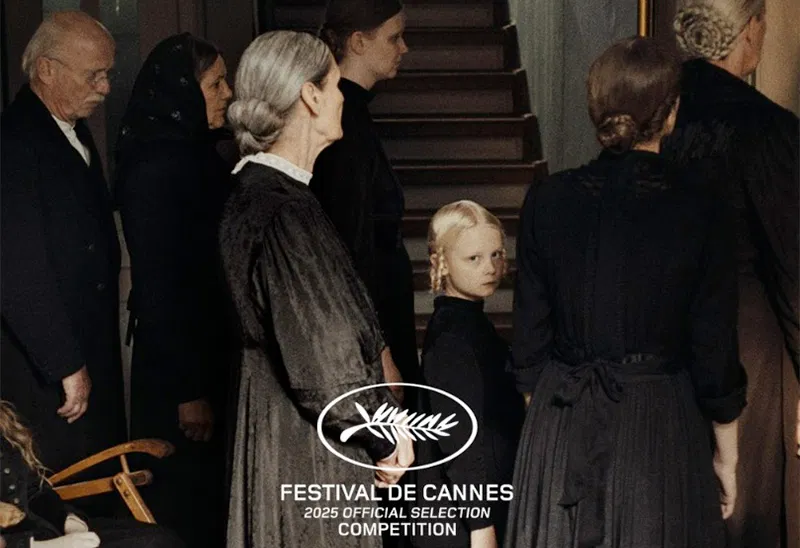
The film premiered in Competition at Cannes 2025 (winning the Jury Prize ex-aequo) and has since built massive buzz:
- Rotten Tomatoes: 96% Tomatometer (Certified Fresh), with consensus calling it “exquisitely well-crafted and laced with mordant humor… a haunting generational drama.”
- Standout quotes: Deadline’s Damon Wise: “Cinema is too small a word… Sound of Falling is an all-timer.” IndieWire’s David Ehrlich (A-): “Tenderly in touch with shared traumas… mines tremendous sorrow.” The Hollywood Reporter: “Arthouse filmmaking with a capital A… reminds us how cinema can still reinvent itself.” Screen Daily: “A work of thrilling ambition realized by an assured directorial vision.”
- A few dissenting voices (e.g., Collider’s 5/10) call it “pretentious” or exploitative in its grimness, but they’re outliers—the overwhelming praise focuses on its poetic power, technical mastery, and emotional depth.
It’s frequently named among the best films of 2025/early 2026, a must for cinephiles who crave challenging, visually stunning work.
Why It’s a Must-Watch in January 2026
In a month of blockbusters and genre fare, Sound of Falling stands out as pure cinematic art—hypnotic, transfixing, and profoundly moving. It explores how trauma seeps through generations, how women’s lives echo across time, and how cinema can access the deepest human interiors. If you loved The Tree of Life, The White Ribbon, or slow-burn arthouse like Apichatpong Weerasethakul, this is essential viewing.
It’s demanding (slow pace, nonlinear, heavy themes), but the rewards—haunting imagery, immersive sound, and a sense of witnessing something truly original—are immense. Perfect for quiet January nights when you’re ready for something that lingers long after the credits.
Where to Watch Sound of Falling (as of January 10, 2026) Currently in limited theatrical release (expanding soon). Check showtimes and buy tickets:
- Fandango – Sound of Falling
- Official trailer and updates: Rotten Tomatoes or the film’s distributor site. No streaming yet (likely to hit platforms like MUBI, Criterion Channel, or arthouse services later in 2026—check JustWatch for updates).
What do you think—ready to dive into this haunting generational epic? Planning to catch it in theaters? Share in the comments!